
Criminal Court Records in Carter County
A criminal court record is the official case file built by the Carter County Court Clerk once a prosecutor files charges. The Court Clerk records, files, and maintains all District Court proceedings, so the criminal case file lives with that office. Each file starts with a charging document and grows as the case moves forward. Clerks log every docket event, hearing, motion, and order. By the time a case closes, the record can hold the charges, bond terms, the plea, the judgment, and the sentence. Carter County criminal court records cover felony and misdemeanor matters filed in the county's District Court.
Most cases begin with an arrest, and the Carter County Sheriff's Office sits at the front of that chain through its main public website. The arrest itself is a law-enforcement event, not yet a court case. Carter County District Court is the trial court of general jurisdiction for criminal matters. It sits in the 20th Judicial District and hears both felony and misdemeanor cases. Felony files carry the heaviest charges, while misdemeanor files cover lower-level crimes. City ordinance and many municipal traffic crimes route to a city court instead, such as Ardmore Municipal Court, so those cases may not appear in a District Court search.
How to Search Carter County Criminal Records
Carter County gives two official online routes to look up District Court criminal cases. The Court Clerk links the public to OSCN and ODCR. OSCN is the Oklahoma State Courts Network. ODCR is the On Demand Court Records portal. Both let you search by name or case number, and a basic look is free. Each site warns that the online page is not the official record.
- Open OSCN or ODCR and choose Carter County District Court.
- Search by the defendant's last and first name, or enter a known case number such as CF-2026-1.
- Narrow the results by case type, such as Criminal Felony or Criminal Misdemeanor, and by filing date.
- Open the case to read the docket, the charges, the plea, and the disposition.
- Request a certified copy from the Court Clerk when you need an official version.
Police incident reports are a separate record from the court case file, and the Carter County Sheriff's Office runs its own records request process for them. 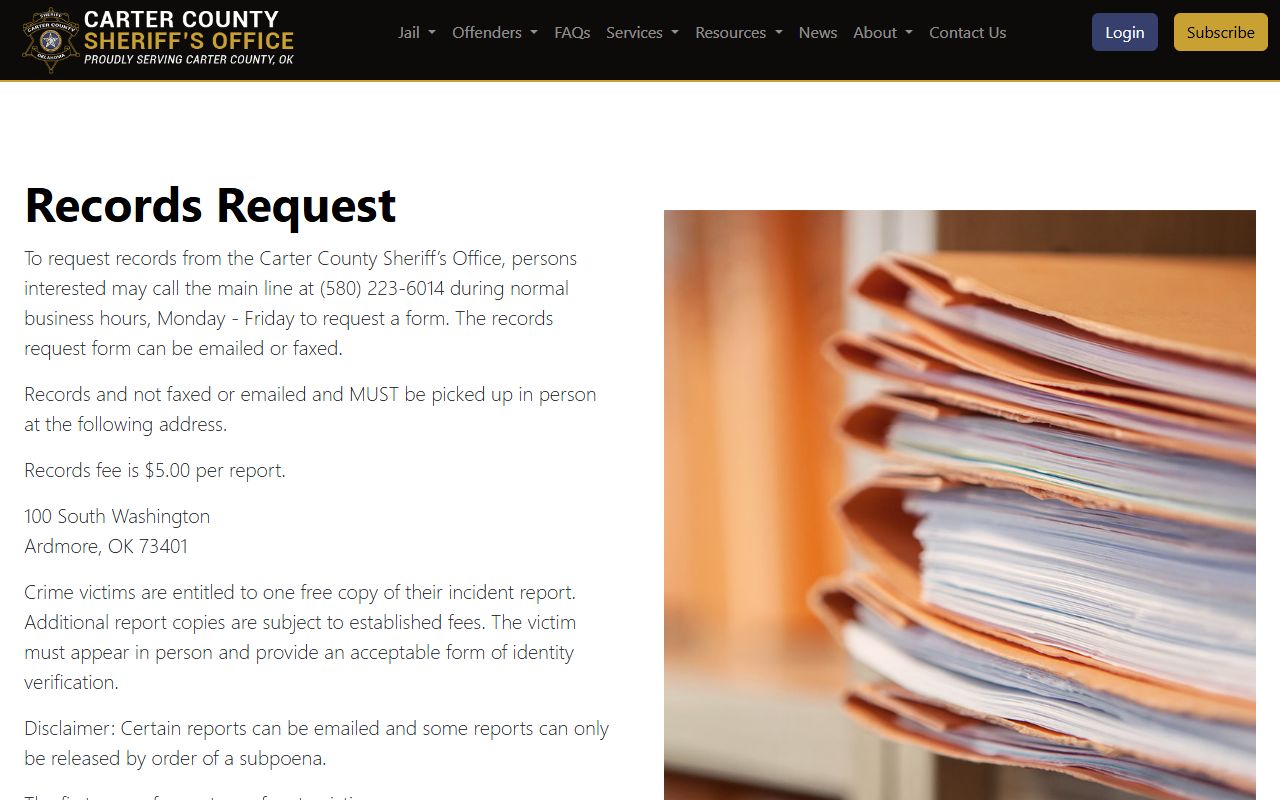 Those reports carry a small fee and often must be picked up in person, while the court case file stays with the Court Clerk. For a statewide criminal background, the Oklahoma State Bureau of Investigation keeps criminal-history records. A District Court search still gives the deepest view of a single Carter County case.
Carter County Felony and Misdemeanor Codes
Every Carter County criminal case carries a code that signals its type. The code sits at the front of the case number, ahead of the year and a sequence number. A reader can tell a felony from a misdemeanor at a glance. The same codes drive a search on OSCN and ODCR.
- CF: Criminal Felony.
- CM: Criminal Misdemeanor.
- Criminal Probable Cause and Criminal Property filings.
- SW: Search Warrant.
- WL: Wildlife.
- YO: Youthful Offender.
- TR: traffic filed by information or complaint.
A felony case number might read CF-2026-1. A misdemeanor might read CM-2026-1. Search warrants ride under the SW code, and youthful-offender matters use YO. Some traffic crimes are filed by information when they rise above a simple ticket. The charges behind each code are tracked through the Carter County arrest records and court charges file as a case moves.
Stages of a Carter County Criminal Case
A Carter County criminal case moves through set stages, and each one leaves a mark in the record. The file grows step by step. Docket entries show the date of every event.
Case flow: Charges Filed › Arraignment › Pretrial / Motions › Plea or Trial › Disposition › Sentencing
Most cases start with an arrest by deputies under the county's elected sheriff, whose office biography outlines his law-enforcement background. 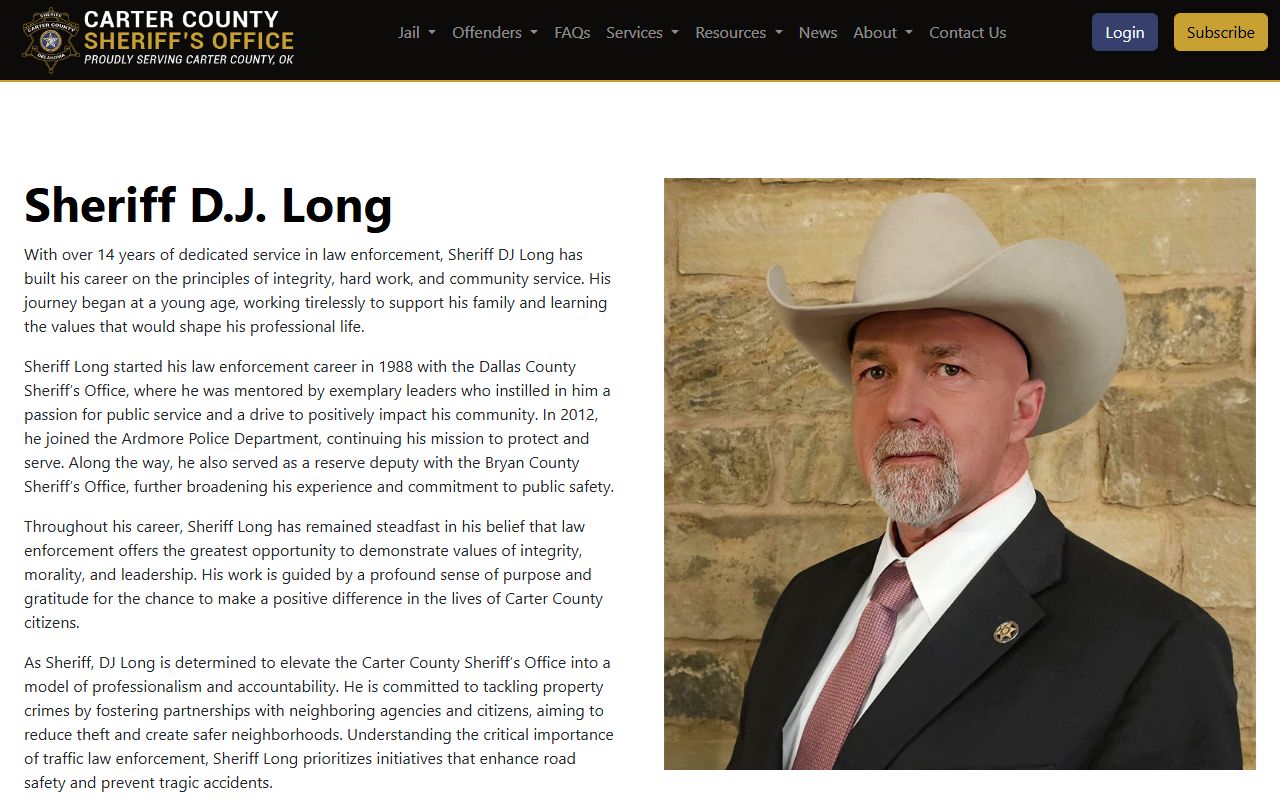 After an arrest, the District Attorney decides what to charge, and only then does the court case open. From that point the clerk's docket carries the case to its close.
- Charges Filed
- The District Attorney files a charging document, called an information, which opens the case and sets the charges.
- Arraignment
- The court reads the charges to the defendant, who enters a plea, and the judge sets or reviews bond.
- Pretrial / Motions
- Both sides file motions, exchange information, and may ask for a preliminary hearing or a continuance.
- Plea or Trial
- The case ends in a negotiated plea or moves to trial, where a judge or jury weighs the evidence.
- Disposition
- The record shows the outcome, such as guilty, not guilty, dismissed, or deferred.
- Sentencing
- After a conviction, the judge imposes a sentence, which the judgment and sentence entry records in full.
What Carter County Criminal Records Show
A Carter County criminal court record holds a deep set of fields. The case caption names the parties and the court. The body of the file tracks every event from the first filing to the close. The fields below appear across most felony and misdemeanor cases.
| Field | What It Shows |
|---|---|
| Case Number | The code, year, and sequence, such as CF-2026-1 for a felony. |
| Defendant | The person charged, listed with party role and the State of Oklahoma as the other party. |
| Charges | Each count as filed, with the statute and the charge level. |
| Judge | The District Judge, Associate District Judge, or Special District Judge assigned. |
| Plea | The defendant's formal answer, such as guilty, not guilty, or no contest. |
| Bond | The amount and type of security set for release before court. |
| Disposition | The outcome of each count, from dismissal to conviction. |
| Sentence | Jail or prison time, fines, restitution, and probation rules after a conviction. |
| Costs and Fees | Court costs, assessments, and receipts logged on the cost ledger. |
Bond, Warrants, and Court Costs
Beyond the charges, a Carter County criminal file tracks money and orders. Bond settings show how much a defendant paid or pledged for release. A surety, such as a bond company, may back that bond. Warrants appear when a judge orders an arrest, often after a missed court date.
Court costs and fines can run long. The Court Clerk distributes collected court money to more than 35 agencies as state law requires, which is why a single cost ledger lists many separate line items. A bench warrant, a capias, or a failure-to-appear note all show in the docket. Carter County held a warrant-clearing event in 2026 to help residents resolve open cases, after the county counted thousands of outstanding warrants across felony, misdemeanor, and traffic files.
Note: A warrant entry in an old case may already be cleared, so confirm any active warrant with the Court Clerk or the Sheriff's Office before acting on it.
Charges vs. Convictions
Being charged is not the same as being convicted. A Carter County criminal record can show charges that were later dropped, dismissed, or sent to an acquittal. A charge is only an accusation. A conviction is a finding or plea of guilt that the court enters into the record.
Some convictions carry lasting duties, and the Carter County Sheriff's Office publishes a sex-offender registry notice tied to state law. 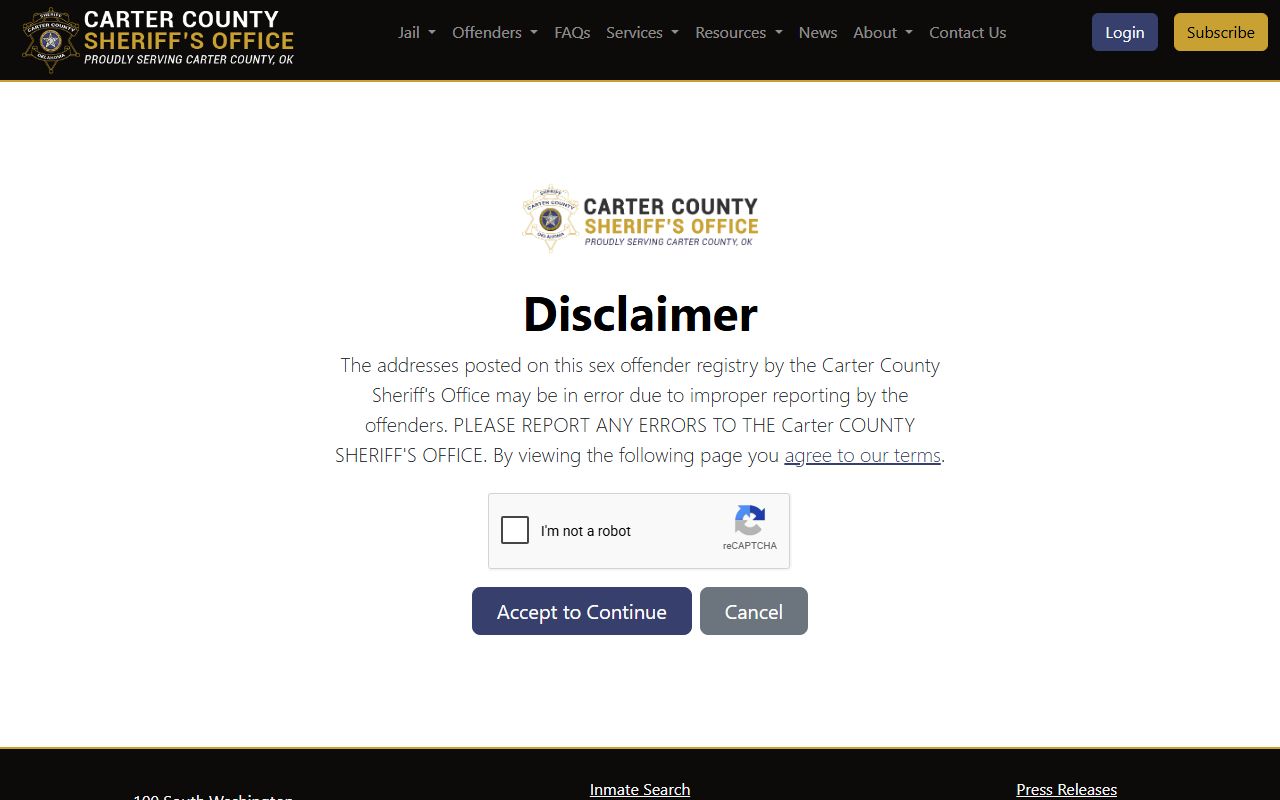 A charge alone never triggers that duty, which is one reason the charge-versus-conviction line matters so much when reading a file.
| Charge | Conviction | |
|---|---|---|
| Stage | Accusation | Verdict or plea |
| Burden of Proof | Probable cause | Beyond a reasonable doubt |
| Meaning | Formal accusation | Established guilt |
| Public Record | Yes | Yes |
Reading Carter County Dispositions and Sentences
The disposition is the outcome of a Carter County criminal case. Common dispositions include guilty, not guilty, and dismissed. A plea of nolo contendere means no contest. A deferred sentence delays sentencing while a defendant meets set conditions. Probation sets supervised rules instead of or after jail time.
When a sentence sends a defendant to state prison, the Oklahoma Department of Corrections offender lookup tracks that custody and the basic sentence. 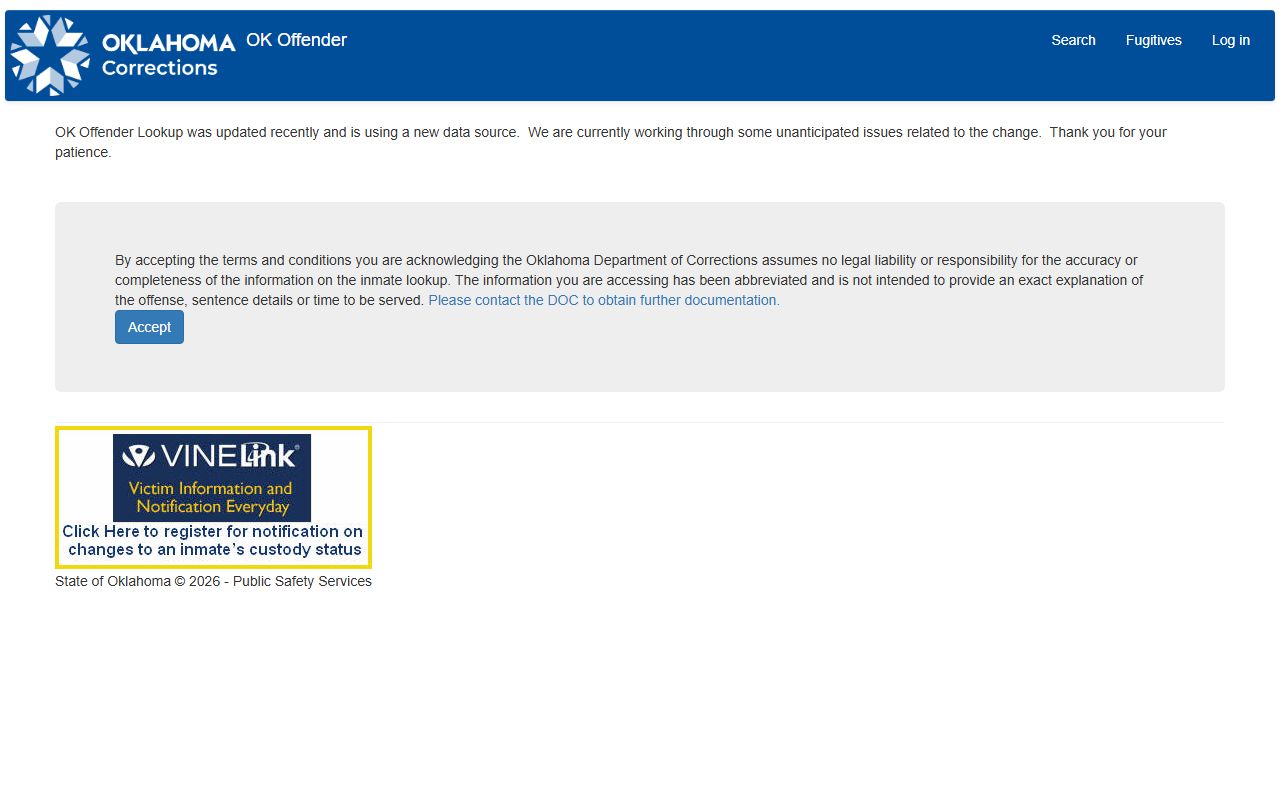 Its disclaimer warns the data is abbreviated, so the Carter County court file remains the fuller source for sentence detail. A sentence line can show jail or prison time, fines, restitution, and probation rules. Read the judgment and sentence entry for the full terms.
The District Attorney's Charging Role
Charges in Carter County come from the District Attorney, not the court. Melissa Handke serves as District Attorney for the 20th Judicial District, which covers Carter, Love, Murray, Marshall, and Johnston Counties. Her office reviews an arrest and decides whether to file, what to file, and at what level. The charging document, called an information, opens the criminal case in District Court.
A defendant who cannot afford a lawyer may receive appointed counsel. The Oklahoma Indigent Defense System or a court-appointed attorney can appear in a Carter County criminal case, and OSCN party roles include public defender. No local public defender office was located in official sources, so appointed-counsel questions route to the court.
District Attorney, District 20
Melissa Handke
Carter County Annex #1, 107 1st Ave SW, Ardmore, OK 73401
(580) 223-9674
Fax (580) 221-5504
Sealed vs. Expunged Records
Some Carter County criminal records leave public view. A court can seal a record, which hides it from public search. An expungement goes further under state law and treats the record as though it never existed. Oklahoma's expungement rules sit in 22 O.S. 18.
The Oklahoma State Bureau of Investigation says it cannot pre-approve eligibility before a court rules. A person seeking relief should pin down the exact case numbers in OSCN or ODCR, review the statute, and file the right petition in the court that handled the case. Once a judge signs the order, it must reach the court clerk, law enforcement, and the OSBI. Local filing fees were not listed in official Carter County sources.
| Sealed | Expunged | |
|---|---|---|
| Visibility | Hidden from public search | Treated as if it never existed |
| Law Enforcement | Limited access | Very limited access |
| Basis in Law | Court sealing order | 22 O.S. 18 petition |
| Eligibility | Set by court order | Qualifying cases under 22 O.S. 18 |
Public Access to Carter County Criminal Records
Most Carter County criminal court records open to the public. Oklahoma's Open Records Act makes government records available for inspection and copying during business hours, unless another law makes them confidential. Criminal case files generally qualify. The official copy still comes from the Court Clerk. For the wider range of county files beyond criminal matters, the Carter County court records reach civil, family, probate, and traffic cases too.
Key Statutes:
Oklahoma 51 O.S. 24A.5 - public records stay open for inspection and copying during regular business hours unless another law makes them confidential.
Oklahoma 22 O.S. 18 - sets who may seek to seal or expunge a criminal record.
Important: An online docket page is not the official court record; only a certified copy from the Court Clerk is accepted in legal proceedings.
Restricted Criminal Court Records in Carter County
Not every Carter County criminal record reaches the public. Juvenile records are confidential under Oklahoma's juvenile code. Sealed and expunged cases drop out of public search. Mental-health and certain youthful-offender details may be limited or withheld. The Open Records Act does not override records that other law makes confidential.
Certain convictions add a public duty, and the Carter County Sheriff's Office lists violent-offender registration under a state act. 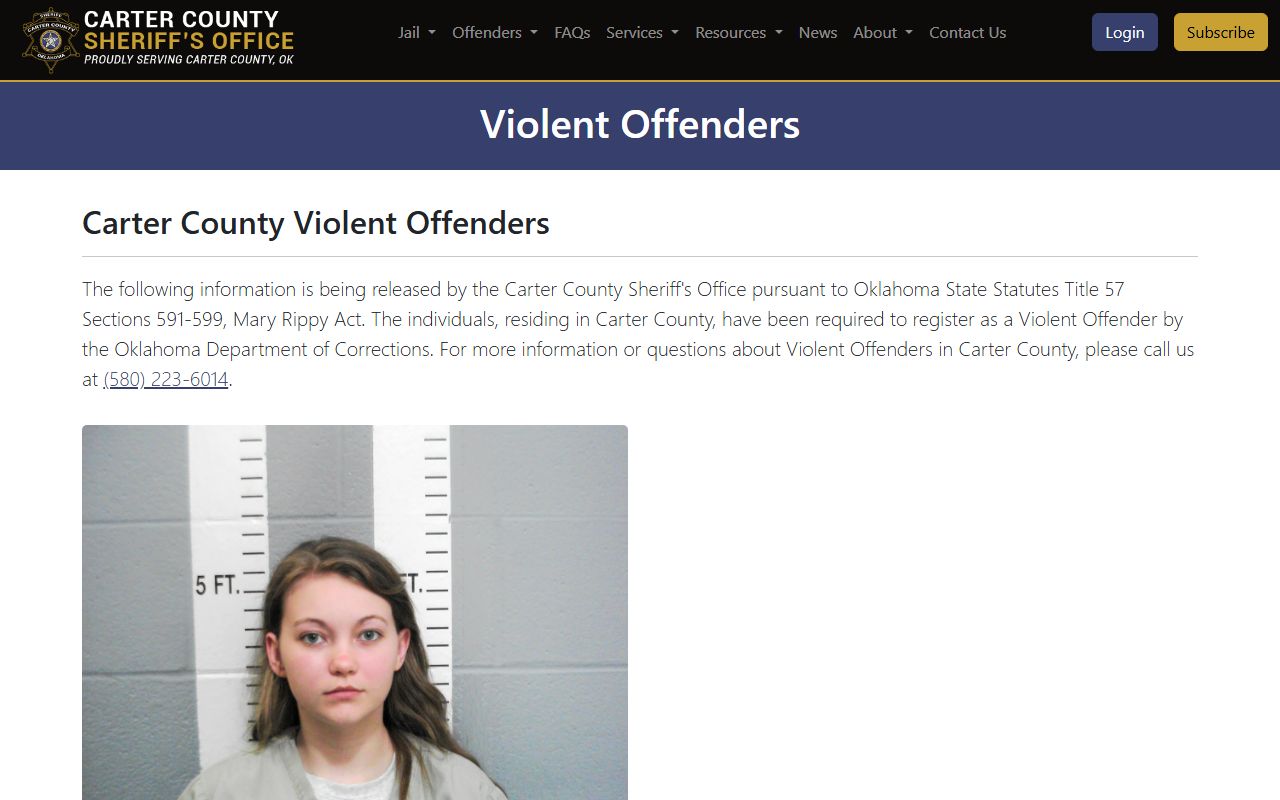 Those registry pages are public, while the juvenile or sealed files behind some cases are not. Online dockets often show a summary rather than the full clerk file. Ask the Court Clerk for sealed-record questions and certified copies.